
Chair sponsorships
GUTEC-sponsored chairs are strategic alliances between universities and companies or institutions to promote applied knowledge, train talent, and transfer results to real projects. Each chair is structured around teaching, applied research/labs, sector dissemination, and talent (internships/employment), with clear governance, measurable KPIs, and integrity.

Value proposition for the company.
- Immediate business impact: pilot projects, technical guides, templates, BIM/MEP libraries, OT/SCADA procedures, and KPIs for adoption.
- Brand and positioning: visibility in the name of the chair, reports, fairs, Demo Days, and technical publications (as agreed).
- Talent pipeline: priority access to students/alumni with GUTEC skill scores and thematic hiring sprints.
- Applied and rapid R&D: quarterly sprints with reusable deliverables and a reproducible package.
- ESG and purpose: link to SDGs, footprint/LCA, responsible purchasing, and training in sustainability and safety.
- Governance and quality: joint committee, metrics, academic audit, and annual public report (executive summary).
Chair models (choose your fit).
Narrow and operational focus (e.g., BIM MEP and 4D/5D coordination, IEC-61850 & Cyber OT, HEC-RAS & SUDS, Pathology & FRP, Data Centers & Commissioning).
Deliverables: guides, libraries, playbooks, demonstrators, customer pilots.
Integration of BIM–GIS–IoT–AI for productivity/quality/ESG; digital twin, reality capture, automated QA, computer vision.
Deliverables: PoC/MVP, datasets, scripts, and replicable cases.
LCA/footprint, NZEB retrofit, SUDS, responsible purchasing, reporting; climate adaptation of infrastructure and buildings.
Deliverables: methodologies, measurement sheets with ROI, templates for green tenders.
Lean, Last Planner, 4D/5D, EVA, risks, FIDIC/NEC, claims/disputes.
Deliverables: PMO manual, risk matrices, claims templates, executive dashboards.
Specific vertical: Hospitals and Cleanrooms, Rail and Signalling, Airports, Ports and Marinas, Social Housing and Urban Regeneration, Industry/Logistics.
Deliverables: sector standards, case studies, comparative KPIs, regulatory roadmap.

All chairs can be combined and evolve in phases (Discovery → Pilot → Scaling).
Scope and coverage (what is included)
Applied teaching: selected modules, masterclasses, bootcamps, and sponsored challenges.
Labs and pilot projects: 2–4 sprints/year addressing real business problems; work at partner locations when it adds value.
Technical publications: guides, white papers, case studies, and presentations (depending on confidentiality).
Events & outreach: symposiums, webinars, Demo Days, GUTEC trade fairs, and industry days organized by the chair.
Talent: prioritized practices, hiring sprints, interview preparation, and onboarding playbooks.
Transfer and adoption: checklists, templates, libraries, scripts, procedures, and train-the-trainer.

Governance (how it is managed and evaluated)
Chair: Lead professor with proven experience in the subject area.
Industrial co-director: technical representative appointed by the company.
Joint Committee (quarterly): 2–3 representatives per party + QA/Legal/ESG where applicable.
RACI summary:
- A (approved): Joint Committee.
- R (execute): Chair + GUTEC team + company team.
- C (consultation): QA, Legal/IP, Data, EHS.
- I (inform): GUTEC community/sector (according to agreed visibility).
Indicators and review: Half-yearly KPIs and annual report with CAPA (corrective actions).
Compliance (legal, data, IP, COI, ESG, EHS)
- Technical documents: guides, internal standards, process maps, policies (e.g., CDE standard, naming, QA/QC checklist, OT hardening).
- Cases and PoC/MVP: verifiable prototypes with acceptance criteria, demos, and user manual.
- Events: conferences, webinars, and Demo Days with agendas and minutes.
- Models/datasets/scripts: BIM libraries, 4D/5D templates, BI dashboards, Python/Power Query scripts, sample files (IFC/BC3/CSV, SCL IEC-61850).
- Teaching materials: syllabus, challenge briefs, assessment rubrics, videos, and practical exercises.
- Annual report: results, KPIs, ROI, risks, and roadmap.

Intellectual property, data, and confidentiality .
Ad hoc results IP: by default, the company owns the specific results (deliverables/PoC).
Ad hoc results IP: by default, the company owns the specific results (deliverables/PoC).
Data: preference for anonymization; if there is sensitive data, access by role, authorized repositories, and logs.
Publication and visibility: only with permission from both parties; there may be a public version without confidential data.
Brands: use of name/logo according to brand manual; mandatory prior review.
Duration/termination: orderly exit clauses, return/retention of materials, and protection of secrets.
KPIs (how we measure impact)
Projects/sprints executed vs. plan.
Entregables validados (guías/librerías/procedimientos) y su adopción interna (% uso).
Productivity (hours per deliverable), quality (non-conformities), deadline (PPC), cost (change orders), safety (closed observations), and ESG (tCO₂e avoided/measures implemented).
Talent: number of internships, conversion rate to employment, time-to-shortlist, and hiring manager satisfaction.
Dissemination: number of events, attendees, downloads, and industry media.
Satisfaction: mid-year and end-of-year survey (target ≥4.3/5).

Sponsorship packages (guidelines)
1 Lab sprint + 1 technical guide + 1 online event + priority access to placements (up to 3 profiles).
Indicative investment: €15,000–€25,000.
2–3 sprints + 2 guides/libraries + 2 events (1 hybrid) + 1 hiring sprint + premium talent directory.
Indicative investment: €40,000–€70,000.
4 sprints + PoC/MVP + 3 publications (white papers/case studies) + 2 major events + 2 hiring sprints + scholarships (joint fund) + brand day on campus.
Indicative investment: €90,000–€150,000.
Multi-year roadmap, portfolio of pilots, external verification of results, presence in the curriculum, and scholarship fund.
Amounts exclude taxes; may vary by country, trips/locations, licenses, and external verification.
Step-by-step process (from idea to launch)
- Executive meeting, objectives, scope, risks, data/IP boundaries, and ESG.
- Concept Note document with value proposition, KPIs, and package.
- Technical workshops; sprint backlog; syllabus/challenges; RACI matrix and calendar.
- Draft Agreement (IP, privacy, COI, communication, financial plan).
- Legal review; electronic signature; internal and external communication (if applicable).
- Launch, roadmap, channels, CDE, templates, and event calendar.
- Sprints, publications, classes/challenges, fairs; quarterly follow-up and mid-term review.
- Annual report, KPIs, and CAPA; updating objectives; decision on renewal/escalation.
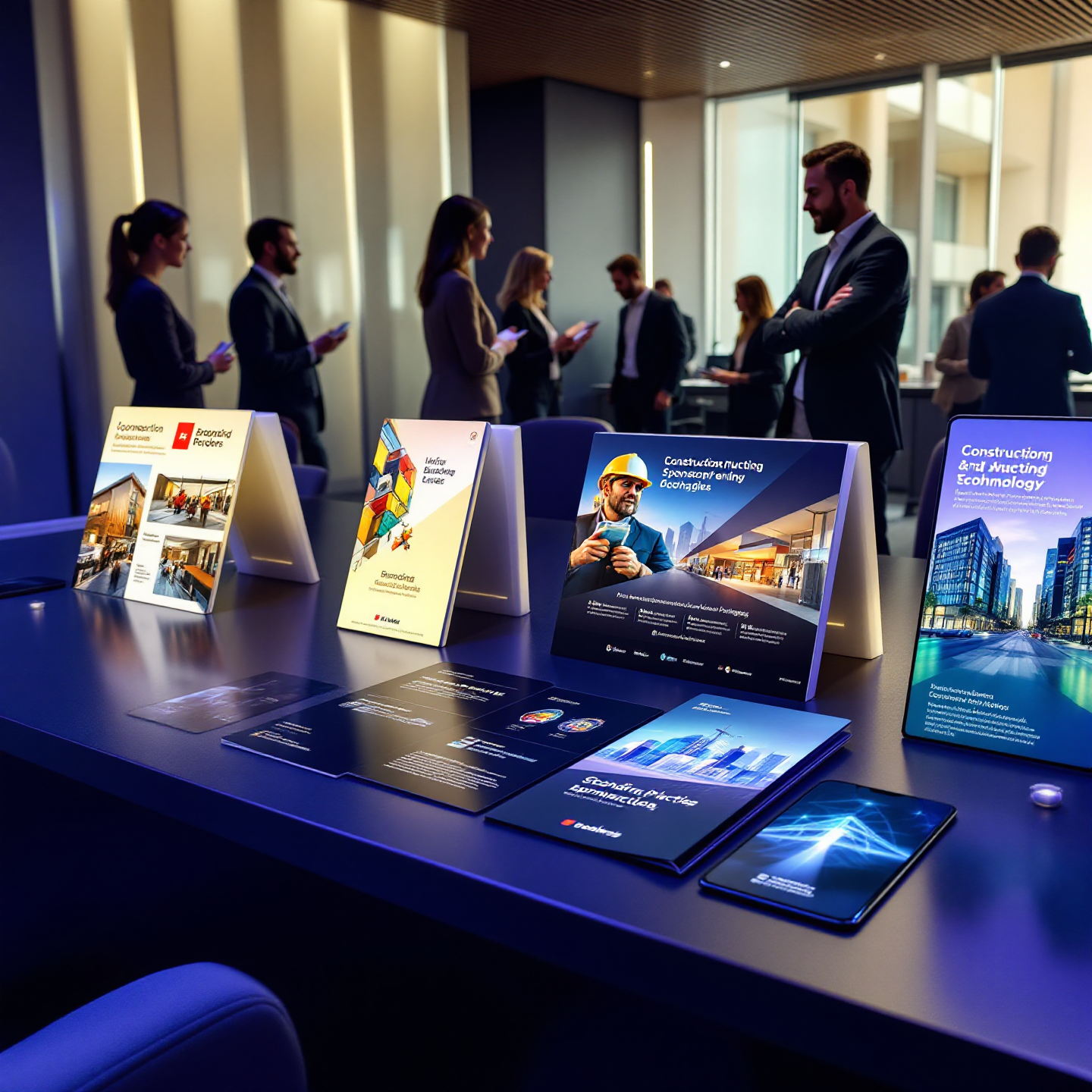
Compliance and safeguards.
- Conflict of interest (COI): annual declaration by all participants; recusal where appropriate.
- Academic integrity: independence of technical criteria; moderation of assessments; objective rubrics.
- Responsible advertising: no misleading claims; prior review of communications.
- Privacy and data: GDPR/local frameworks; ARSOPL rights; DPIA if applicable.
- Institutional ESG: alignment with SDGs; responsible purchasing; sustainable events.
- EHS: safety in workshops/offices; permits and PPE; no photo if applicable.
- Light audit: annual review of processes and evidence.
Suggested topics (sample list)
- BIM & ConTech: CDE and automated QA; integrated 4D/5D; Scan-to-BIM; IFC libraries.
- MEP & Data Centers: comprehensive commissioning; operation and redundancy; efficiency; PCI/REBT.
- OT/SCADA & IEC-61850: architecture, hardening, testing, incident response; continuity.
- Infrastructure & Transport: drainage and road surfaces; railway/ERTMS interfaces; ITS.
- Hydrology & SUDS: rain resilience; river restoration; SUDS maintenance.
- Structures & Geotechnics: pathology; FRP/post-tensioning; underpinning; auscultation.
- ESG & LCA: NZEB retrofit; materials and taxonomy; responsible purchasing; reporting.
- Project/Contracts: Lean/Last Planner; EVA; risks; FIDIC/NEC and dispute resolution.
FAQs (extended)
Between 6 and 10 weeks from the “go” to kick-off, depending on legal/thematic complexity.
Yes. The agreement may provide for private teaching without public publications, except for mandatory aggregate indicators.
By default, the company provides ad hoc results; GUTEC provides its basic methodologies. Licenses and limits are detailed.
Yes. A scholarship fund can be created with associated criteria (merit, need, geographic/gender diversity).
No. Academic independence is mandatory. The company can propose challenges and participate in panels, but the evaluation is carried out by GUTEC with moderation.
Only if absolutely necessary; we prefer anonymization or synthetic datasets.
There is change control in the backlog; adjustments that impact deadlines/deliverables are agreed upon by committee.
Yes. Let's model locations/languages/time zones; mirror content ES/EN.
Yes. It is decided after the annual report; we can expand its scope, venues, languages, or turn it into a multi-year flagship event.